Jestheticmed
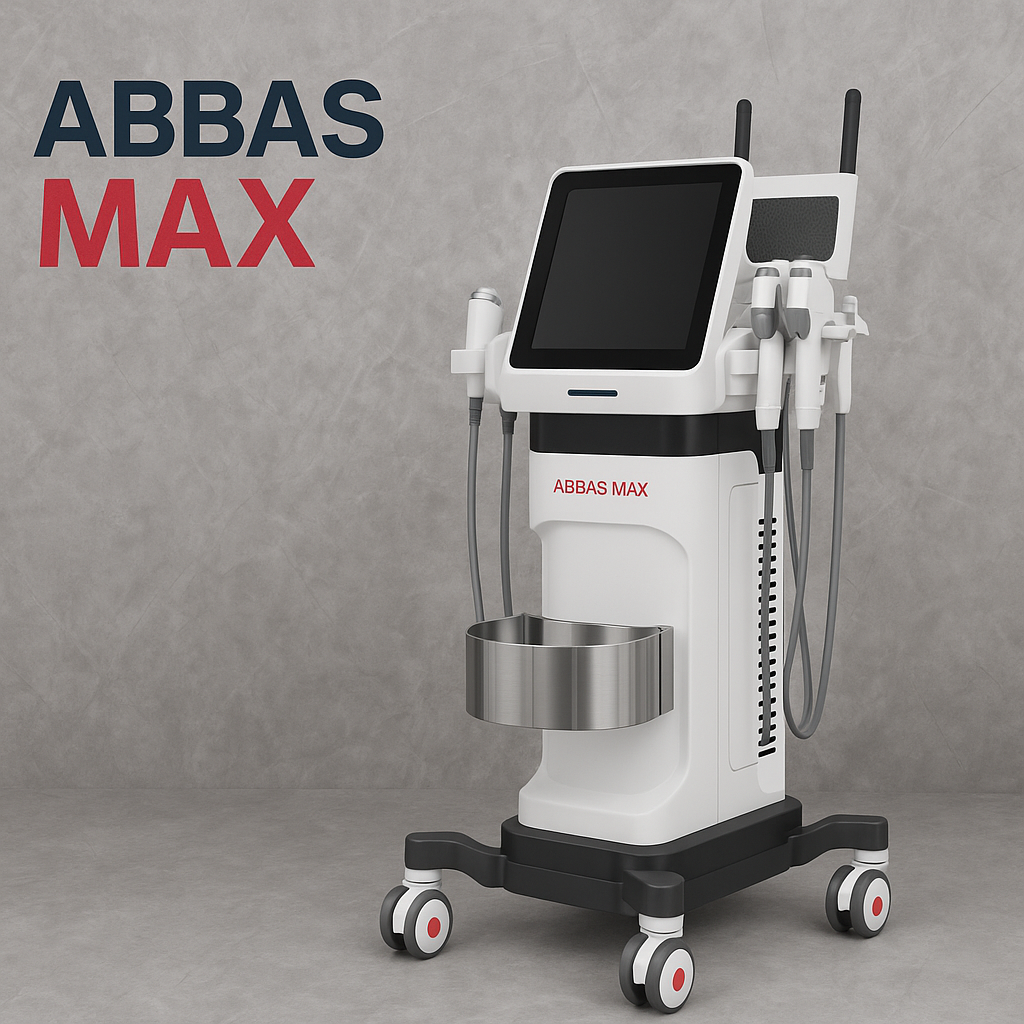
ABBAS MAX – Cryo-Electroporation and Cryo Solution Penetration & Cooling
ABBAS MAX – Cryo-Electroporation and Cryo Solution Penetration & Cooling
Couldn't load pickup availability
Definition of Sensitive Skin
In medical terms, sensitive skin refers to a skin condition that exhibits a high-reactivity state under physiological or pathological conditions (sensitive skin is not a disease but a condition). The skin experiences abnormal reactions when exposed to external stimuli.
-
Three Characteristics of Sensitive Skin
:
- High Sensitivity
- Poor Tolerance
- High Reactivity
Types of Sensitive Skin
- Congenital Sensitive Skin (30%): Linked to genetic factors (susceptible genes). The skin is naturally thin and dry, requiring long-term use of medical skincare products and devices.
- Acquired Sensitive Skin (70%): Resulting from external factors or improper use of skincare products, inadequate post-treatment care, etc.
Skin Barrier
The outermost layer of the skin is the stratum corneum, composed of 5-15 layers of keratinocytes and intercellular lipids. This structure forms the skin's natural protective barrier, often referred to as the "skin barrier."
- Design Improvements
To improve the clarity of this content and make it more visually appealing, I suggest the following design improvements:
- Section Titles : Make the section titles stand out with larger fonts or bolded text for easy navigation.
- Bullet Points : Use bullet points for important lists (like the characteristics of sensitive skin or steps in treatment procedures). This makes the information more digestible and less overwhelming for the reader.
Example :
-
-
Top Three Skin Care Needs
:
- Whitening
- Sensitive Skin
- Hydration and Moisturizing
-
Top Three Skin Care Needs
:
- Tables or Diagrams : Where there are comparisons, such as between congenital and acquired sensitive skin, consider using tables or diagrams for clarity.
Abbas Max Handles
- Non-invasive Hydration Handle : Uses high-pressure pulses to create nano-sized molecules, enabling the skin to absorb products deeply without direct contact.
- Electroporation Handle : Opens skin pores with electric pulses, enhancing the penetration of skincare products.
- EMS Handle : Uses microcurrents to stimulate skin muscles, promoting blood circulation and enhancing skin metabolism.
- Red Light Handle : Uses a specific wavelength of red light (635nm) to activate cellular processes, improving skin health.


Clinical Applications
The device is suitable for various clinical skin care treatments, including:
- Daily Skin Maintenance
- Sensitive Skin Repair
- Post-treatment Recovery
- Scalp Care
Non-Needle Hydration Technology
- The non-contact treatment utilizes high-pressure pulses to open skin absorption channels, atomizing products into nano-sized molecules, which are absorbed into the skin to replenish oxygen and nourish the skin.
Non-Needle Hydration Effects:
- Deep Hydration
- Regulates Skin Tone
- Increases Oxygen Levels in Skin
Electroporation Technology
Electroporation is an effective transdermal drug delivery technique that uses specific electrical pulses to open cell membranes. This allows for increased absorption of skincare products without disrupting their integrity, enhancing skin hydration, and speeding up metabolism.
Abbas Max Device Handles: Detailed Descriptions
- Cold Electroporation : This technology opens skin pores, enabling deeper product penetration. It helps deliver products to deeper layers of the skin while enhancing their absorption.
- EMS Technology : Microcurrents stimulate skin cells, enhancing blood flow, accelerating product absorption, and improving skin elasticity.
Comparing Electroporation and Other Techniques:
-
Electroporation
:
- Does not damage the product composition.
- Achieves up to 90% absorption of the product.
- Temperature is adjustable (from -5°C to 45°C).
- Ideal for introducing a wide range of products.
- Accelerates skin metabolism.
- Ultrasound and Radio Frequency : These methods offer lower absorption rates and may damage product efficacy.